
Coffee Machine Care
Best descaler for coffee machine: Protect Your Brewer and Boost Flavor

Jan
Did you know that the water in over 85% of American homes is considered "hard"? This means every time you brew a cup of coffee, you're likely introducing minerals that silently build up inside your machine, choking its performance and creating a potential breeding ground for bacteria. This unseen enemy, called limescale, is the number one reason for slow brew times, lukewarm coffee, and eventual machine failure.
This isn't just an inconvenience; it's a silent assault on your daily ritual. That chalky, stubborn buildup constricts the flow of water, forcing the heating element and pump to work overtime just to function. The result? Your machine strains, your energy bills creep up, and your once-perfect coffee starts tasting disappointingly bitter and metallic. Even worse, the porous surface of limescale can harbor bacteria and mold, tainting your expensive coffee beans with nasty off-flavors and introducing a potential health risk into your morning routine.
The solution is simpler and safer than you think. Using a professionally formulated, non-toxic descaler like PureHQ's Universal Descaling Solution is the only way to effectively dissolve this internal threat. It gets rid of stubborn mineral scale without the harshness of vinegar, protecting your machine’s delicate parts and restoring your coffee's pure, intended flavor.
The Hidden Damage Lurking in Your Morning Coffee
That fresh, aromatic cup of coffee you count on every morning might be hiding a dirty secret. Deep inside your machine, a chalky, stubborn buildup called limescale is quietly forming. It’s totally unseen, but it’s incredibly destructive. This is the core problem every single coffee machine owner faces, whether they realize it or not.
Now, let's get real about what that means. Think of this mineral scale as cholesterol for your coffee maker’s internal "arteries." With every brew cycle, it constricts the flow of water, forcing the heating element and pump to work way harder than they should. The immediate results? Annoyingly slow brew times and lukewarm coffee that just doesn't hit the spot.
But the consequences run much deeper than just a disappointing cup. The porous, chalky surface of limescale can become a breeding ground for bacteria and mold. This not only taints the taste of your expensive coffee beans with nasty off-flavors but also introduces a potential health risk into your daily ritual.
The Problem With Limescale
Limescale isn't just an inconvenience; it's a silent killer for both your machine and your coffee's quality. This hard, off-white deposit forms when the calcium and magnesium in your tap water get heated up. It then clings tenaciously to the most critical parts of your brewer:
-
Heating Element: Scale acts like an insulator, forcing the element to work overtime and suck up more electricity just to hit the right brewing temperature. This strain is one of the leading causes of premature machine failure.
-
Internal Tubing: As scale narrows the water pathways, your machine's pump is put under immense pressure. That leads to those strange gurgling noises, inconsistent flow, and eventually, a total breakdown.
-
Water Reservoir: The residue can harbor biofilms—that slimy layer that contaminates the fresh water you add, directly wrecking the final taste in your cup.
The solution isn't just wiping down the outside. That does nothing to fix this internal menace. You need a targeted, deep-cleaning approach to get to the root of the problem.
"The reality is that limescale buildup is the number one enemy of any coffee machine. It silently degrades performance, compromises flavor, and shortens the lifespan of the appliance. Regular descaling isn't optional—it's essential maintenance."
Restoring Your Machine and Flavor
Using a high-quality descaler is the only way to safely dissolve this internal threat. A professionally formulated solution targets and eliminates mineral buildup without damaging the sensitive seals, gaskets, or metal components inside—a common risk associated with harsh DIY fixes like vinegar. For the purest taste, remember that clean water is just as important; pairing your descaling routine with fresh charcoal water filters ensures every single drop is pristine.
By dissolving the scale, you restore your machine's performance, ensuring every cup is brewed at the perfect temperature, speed, and pressure. The result is coffee that is consistently hot, delicious, and pure. Now is the perfect time to give your machine the care it deserves.
Shop PureHQ's Universal Descaling Solution today and taste the difference a truly clean machine makes.
Why Descaling Is Your Coffee Machine's Most Important Checkup
Let's talk about the one maintenance step that’s more important than any other for your coffee machine: descaling. Think of it like an oil change for your car. You wouldn't skip it and expect the engine to last, right? The same goes for your brewer. This isn't just another cleaning chore—it's the single best thing you can do to protect your machine and guarantee a perfect cup, every single time.
This goes way beyond just keeping things looking clean. It's about performance and safety. A staggering 85% of households in the U.S. have hard water, which is ground zero for limescale. This chalky, silent killer builds up inside your machine, choking its internal parts and causing a whole list of problems that start long before your coffee tastes bad.
The Science of Scale and Strain
So, what’s actually happening inside your brewer? The calcium and magnesium in hard water crystallize and cling to the heating element, forming a rock-hard layer of scale. This forces the machine to work much harder and burn more electricity just to hit the right brewing temperature.
That constant strain is the culprit behind those strange gurgling sounds, slow brew times, and eventually, a complete breakdown. Your machine is literally fighting itself to function. Neglecting it is a surefire way to end up with costly repairs or, even worse, the premature death of an appliance you depend on every morning. The problem isn't unique to coffee makers, either. For a sense of how widespread this issue is, just look at the essential role descaling plays when mastering commercial ice machine cleaning, where mineral buildup is a constant battle.
And as more people invest in quality coffee at home, this problem is only getting bigger. The global coffee machine market was valued at USD 6.05 billion in 2024 and is expected to hit USD 8.47 billion by 2032. With all the automatic, pod-based, and specialty machines out there, routine maintenance with the best descaler for coffee machine solutions has become non-negotiable.
Limescale acts as an insulator on a heating element, forcing it to overheat just to function. This thermal stress is a primary cause of component failure, drastically reducing the lifespan of a coffee machine.
How Limescale Destroys Your Coffee's Flavor
Besides wrecking the machine itself, limescale launches a direct assault on the taste of your coffee. The scale completely throws off the water's mineral balance, introducing bitter, sour, and metallic flavors that mask the delicate notes of your expensive coffee beans.
You could buy the world's finest single-origin beans, but if your machine is full of scale, you're just brewing them with compromised water. The result? A flat, disappointing cup that has none of the aromatic complexity you paid for. This is often the real reason a machine that once made great coffee starts producing mediocre brews.
A common thing we hear is, "But my machine has a water filter, so I don't need to descale." While filters are great for removing chlorine and other impurities, they don't soften water or prevent limescale. Only a dedicated descaling solution can break down and dissolve those stubborn mineral deposits. Think of it this way: the filter purifies the water, but the descaler saves the machine. For a closer look at this, check out our guide on descaling a Keurig machine for a better coffee taste.
The fix is surprisingly simple. Using a powerful yet gentle descaling solution is the only way to safely eliminate this internal threat. It brings your machine back to peak efficiency and makes sure every cup is as hot, fast, and flavorful as it should be.
Commercial Descalers Vs DIY Vinegar Myths
When it’s time to descale, it’s tempting to grab that big bottle of white vinegar from the pantry. It’s cheap, it's right there, and a quick internet search will tell you it's a perfectly fine, all-natural shortcut. You know you need to clean your machine, and this popular DIY hack seems almost too good to be true.
And that’s because it is.
The truth is, while vinegar might seem like a harmless kitchen staple, using it in your expensive coffee machine is a risky gamble. The sharp, pungent smell of acetic acid has a nasty habit of clinging to the internal tubing and rubber seals, sometimes for dozens of brew cycles. The result? Coffee with a sour, vinegary aftertaste you just can’t seem to shake.
Even worse, that same acid is harsh. Over time, it can slowly degrade the sensitive rubber gaskets and O-rings that keep your machine from leaking, causing them to become brittle and eventually fail. This is one of the most common causes of frustrating leaks, and using vinegar can even void your manufacturer's warranty.
The real solution is to use a product that was actually engineered for the job. A professionally formulated descaler is designed to be tough on limescale but gentle on your machine's delicate internal components. It dissolves mineral buildup efficiently without leaving behind any taste or damaging crucial parts, making it the clear choice for anyone serious about their coffee and their equipment.
The Science Behind Smart Descaling
A purpose-built descaler, like our PureHQ Universal Descaling Solution, uses a carefully balanced blend of organic acids like citric and lactic acid. These compounds are chosen for their powerful chelating properties—think of them as tiny magnets that grab onto mineral ions like calcium and magnesium, pulling them away from surfaces and dissolving them completely.
This targeted action is what makes it so effective. It’s powerful enough to dissolve scale without being overly aggressive on the machine itself. Unlike the indiscriminate nature of the acetic acid in vinegar, these formulations work in harmony with your brewer's components. They deliver a thorough clean that restores performance and protects your investment for the long run.
"Vinegar’s acetic acid can be corrosive to the internal components of a coffee machine, especially rubber seals and aluminum parts. A citric acid-based descaler is a much safer and more effective alternative specifically formulated for this task."
Commercial Descaler Vs DIY Vinegar: A Head-To-Head Comparison
To be fair, not all vinegars are created equal, and it's useful to understand the differences between products like Cleaning Vinegar vs White Vinegar. But when it comes to the delicate inner workings of your coffee machine, a specialized solution is always the smarter, safer bet.
Let's break down exactly why.
| Feature | PureHQ Universal Descaler | Standard White Vinegar |
|---|---|---|
| Primary Ingredient | Formulated with food-grade citric and lactic acids for targeted scale removal. | Contains acetic acid, a harsh acid not designed for coffee machine components. |
| Effectiveness | Rapidly dissolves heavy limescale buildup, restoring machine efficiency quickly. | Can dissolve light scale but often requires multiple, lengthy cycles for results. |
| Machine Safety | Gentle on internal parts, including rubber gaskets, O-rings, and aluminum boilers. | Corrosive to rubber and aluminum over time, increasing the risk of leaks and failure. |
| Taste & Odor | Rinses away completely, leaving no aftertaste or smell in your next brew. | Leaves a strong, pungent odor that can taint coffee flavor for many cycles. |
| Warranty Compliance | Safe to use and recommended by many manufacturers, protecting your warranty. | Use is often discouraged and can void the manufacturer’s warranty. |
| Convenience | Pre-mixed liquid for easy, no-mess application and fast results. | Requires dilution, and its strong smell can linger in your kitchen. |
As you can see, the choice is pretty clear. While one is a generic household cleaner, the other is precision-engineered for one job: keeping your coffee tasting pure and your machine running perfectly.
Why Risk It? The Clear Choice for Your Brewer
Ultimately, it all comes down to risk versus reward. Sure, vinegar might save you a few dollars upfront, but the potential costs of a damaged machine, a voided warranty, and weeks of bad-tasting coffee just aren't worth it.
A high-quality descaler is an investment in consistency, longevity, and flavor. A clean water path is essential for the best-tasting brew. For peak performance, pairing a descaling cycle with a fresh set of PureHQ charcoal filters is the perfect way to reset your machine. Give your brewer the specialized care it needs and taste the difference.
Ready to protect your machine and restore your coffee's pure flavor? Shop PureHQ's Universal Descaling Solution today and descale with confidence.
Your Step-By-Step Guide To A Perfectly Descaled Machine
Alright, let's get your machine back to its old self. The idea of running a descaling cycle might sound a little technical, but I promise it’s way easier than it seems. Once you’ve got the right descaler in hand, the whole thing takes just a few minutes of your time.
This guide will walk you through it, step by step. We’ll use a classic single-serve pod brewer (think Keurig) as our example, but you can easily adapt these instructions for pretty much any machine out there, from Ninja to Nespresso and even your trusty drip coffee maker.
Preparing Your Machine
First things first, a little prep work goes a long way. Giving your machine a clean slate ensures the descaling solution can get straight to work without anything getting in its way.
Start by emptying the water reservoir and pulling out any old water filters. You definitely don't want to run the descaler through a filter you’re just going to throw away. Next, pop out any pods left in the brew chamber and make sure the drip tray is empty and clean.
Finally, grab a big ceramic mug and place it under the spout. It’s going to catch all the gunk the descaler flushes out.
The Five Steps To A Flawless Descale
With your machine ready to go, you can dive right in. The whole process is just five simple steps. Follow them in order, and you’ll give your brewer the deep clean it’s been craving.
-
Mix The Descaling Solution: Pour the entire bottle of descaling solution into the empty water reservoir. Now, fill that empty bottle with fresh water and pour that into the reservoir, too. Don't add any extra water—this precise ratio is what makes the formula so effective.
-
Run The Main Descaling Cycle: Turn on your machine and run a full brew cycle using the largest cup size setting. Keep running brew cycles until the reservoir is completely empty. Just remember to dump the hot water from your mug after each pass.
-
Let It Sit (Optional but Recommended): Once the reservoir is empty, let the machine rest for about 30 minutes. This little pause gives the solution still trapped inside the machine’s pipes and heating elements time to break down any really stubborn mineral deposits.
-
Perform Several Fresh Water Rinses: Rinse the water reservoir thoroughly, then fill it to the max line with fresh, clean water. You’ll want to run at least 3-4 full rinsing brew cycles to flush every last trace of the solution out. This step is super important for making sure your next coffee tastes like coffee, not cleaner.
-
Clean All Removable Parts: While the rinse cycles are running, it’s the perfect time to wash the drip tray and pod holder with some warm, soapy water. If you want to go even deeper, check out our complete guide on how to clean your coffee maker thoroughly.
Still wondering if it's worth using a dedicated descaler instead of something like vinegar? This comparison makes it pretty clear.
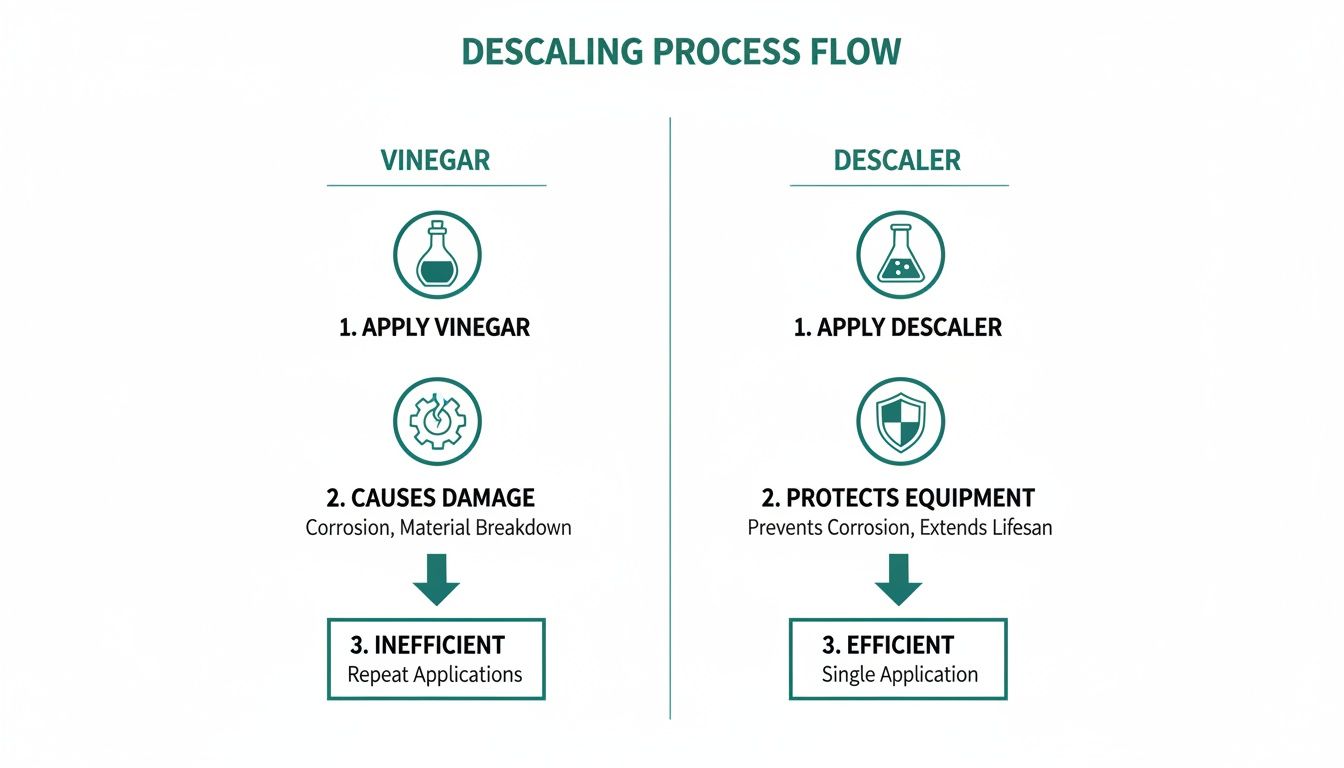
As you can see, vinegar can be harsh and potentially damage your machine's internal parts. A properly formulated descaler, on the other hand, gets the job done safely and efficiently.
A Pro Tip For The Perfect Finishing Touch
Want to really elevate your next cup? Now that your machine is sparkling clean, this is the absolute best time to pop in a new charcoal water filter. A clean water path combined with a fresh filter is the secret to the purest-tasting coffee you can make at home.
It's no surprise that most people prefer a simple liquid descaler. In fact, liquid solutions command over 54% of the market share simply because they’re convenient and work fast. You don’t have to wait for powders or tablets to dissolve.
That trend is only growing. Projections show the liquid descaler market climbing from USD 980 million in 2024 to USD 1.70 billion by 2032. It’s clear that when it comes to keeping their coffee makers in top shape, people want a reliable liquid formula that just works.
The Smart Solution For Every Coffee Lover
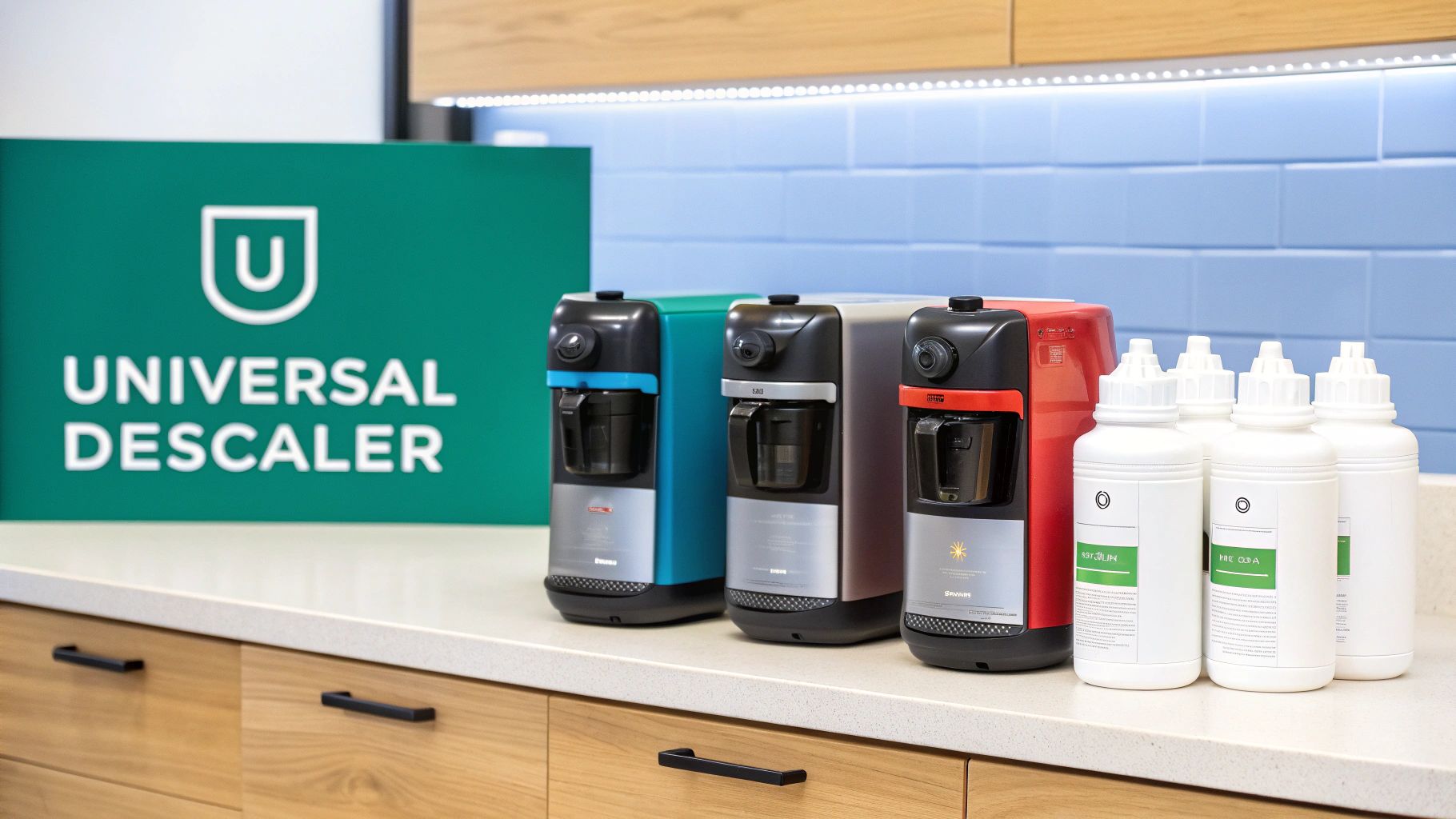
You know your machine needs descaling, but then you hit the cleaning aisle or browse online, and the wall of options is overwhelming. Do you need one bottle for your Keurig and a different one for your Nespresso? What about that fancy Breville espresso machine you just splurged on?
This is where most people get stuck. The confusion leads to buying a clutter of expensive, brand-specific descalers or, even worse, doing nothing at all. All the while, that destructive scale is silently building up, choking your machine’s performance and ruining the taste of every single cup. It’s a frustrating cycle that costs you money and sabotages your coffee experience.
But the fix is much simpler than the brands want you to think. Forget juggling multiple products. You just need one smart, powerful, and safe formula that handles it all. A universal descaling solution is hands-down the best descaler for coffee machine owners because it kills the guesswork and delivers the same reliable results, every time, for every brewer you own.
One Descaler To Rule Them All
A truly universal formula, like ours at PureHQ, is engineered from the ground up for maximum compatibility. It’s designed to work flawlessly and safely across your entire coffee collection—from single-serve pod brewers and drip coffee makers to high-end espresso machines.
The secret is its powerful yet gentle citric acid-based formula. Proudly made in the USA, it aggressively targets and dissolves stubborn mineral deposits without harming the sensitive internal components of your machine, like rubber gaskets or aluminum heating elements. You get a deep, effective clean every single time, no matter what you're brewing with.
We hear the same concern all the time: "Will this cause leaks?" It's a valid worry. Some descalers, especially harsh DIY recipes using vinegar, can degrade rubber seals over time, leading to disastrous (and expensive) leaks. Our formula is precisely balanced to be tough on scale but gentle on your machine's parts, giving you a deep clean that actually protects your investment.
A universal descaler simplifies maintenance by providing a single, trusted solution for a multi-machine household. It ensures consistent cleaning performance and protects all your coffee investments, from a basic drip brewer to a sophisticated espresso setup.
This focus on compatibility is more important than ever. The global market for coffee machine descalers has exploded, but it’s incredibly fragmented. No single company holds more than a 15% market share. This has opened the door for specialized brands to meet a growing demand for reliable, compatible solutions for specific systems like Keurig or Ninja DualBrew. You can discover more insights about this expanding coffee care market and see why smart, universal products are leading the way.
The Value Of A Smarter Choice
Beyond just working better, a universal descaler is a much smarter buy, especially when you grab a value bundle. Those single-use, brand-name descalers are shockingly expensive, and the cost adds up fast over a year of proper maintenance.
Let’s break down the real-world value.
This table shows just how much more you get by ditching the overpriced single-serving packets from big brands.
PureHQ Value Bundle Vs. Standard Alternatives
| Metric | PureHQ Descaler Value Pack | Leading Brand (Single Use) |
|---|---|---|
| Number of Uses | 4 full descaling cycles | 1 descaling cycle |
| Cost Per Cycle | Significantly lower, offering bulk savings | High, paying a premium for branding |
| Compatibility | Universal fit for all major coffee machine brands | Often limited to a specific brand or model line |
| Formula | Powerful yet gentle citric acid-based formula | Varies; some may use harsher or less effective agents |
When you choose a value pack, you're not just cleaning your machine—you're making a savvy financial decision that protects its longevity and keeps it performing at its best for years.
For the ultimate clean-coffee routine, pair your descaling cycle with a fresh set of our charcoal water filters. This one-two punch ensures you're removing impurities before they even enter the machine, guaranteeing the purest possible taste in every cup.
Stop guessing and start protecting your coffee gear. Give your machine the care it deserves with a solution built for every coffee lover.
Shop the PureHQ Universal Descaling Solution today and taste the difference a truly clean machine makes.
Your Descaling Questions, Answered
Even with the best guides, a few questions always pop up when you're getting started with coffee machine maintenance. Let's tackle the most common ones so you can descale with total confidence.
How Often Should I Descale My Coffee Machine?
The honest answer? It depends. The two biggest factors are your water hardness and how much coffee you brew.
As a general rule of thumb, descaling your machine every 2-3 months is a great starting point for most people with average tap water. But if you know you live in an area with very hard water (lots of minerals), you might need to do it monthly to keep that limescale from getting a foothold.
Can a Descaler Fix a Clogged Coffee Maker?
Sometimes, but it's not a magic bullet. Think of descaling as preventative care, not emergency surgery. If your machine is slow because of minor mineral buildup restricting water flow, a good descaling can absolutely clear things up and get it running smoothly again.
However, a descaler can't fix a broken pump or an electrical problem. If you’ve run a thorough descaling cycle and your machine is still on the fritz, it's likely time to call in a professional.
Here's a key distinction that trips people up: descaling is for internal mineral buildup (limescale) on the heating element and in the water lines. Cleaning, on the other hand, is for the external coffee gunk—oils and residue on the carafe, filter basket, and brew head. You need to do both to get that perfect cup.
Is This Descaling Solution Safe For My Machine?
This is probably the number one worry we hear, and it's a valid one! The last thing you want is to damage your expensive coffee maker. A high-quality descaler formulated with citric acid is specifically designed to be tough on scale but gentle on your machine’s internal parts.
It's universally compatible and safe for all the major players—Keurig, Nespresso, Breville, and your standard drip coffee makers. The real danger comes from harsh DIY solutions like pure vinegar, which can be too acidic and slowly eat away at rubber gaskets and O-rings over time.
And what about that pesky descale light that just won't turn off, even after you've done everything right? It happens. If you find yourself in that spot, our guide on how to turn off the Keurig descale light has some great troubleshooting tips that often work for other brands, too.
Ready to protect your machine and get back to the pure, clean flavor your coffee is supposed to have? PureHQ has the perfect solution to keep your brewer happy and your coffee tasting incredible.
Shop the PureHQ Universal Descaling Solution today and taste the difference.


Pingback: How to Clean Breville Coffee Maker: A Step-by-Step Guide for Flawless Espresso
Pingback: Your Coffee Water Is Dirtier Than You Think: The Fix Is Simple
Pingback: How to Clean Ninja Coffee Maker for Fresh, Great-Tasting Coffee
Pingback: Your Guide to Fixing Clean Water Stained Windows for Good - Sparkle Tech Window Washing
Pingback: A Beginner's Guide to Cleaning Your Breville Espresso Machine
Pingback: How to Descale Your Espresso Machine for a Better, Faster Brew - PureHQ